0
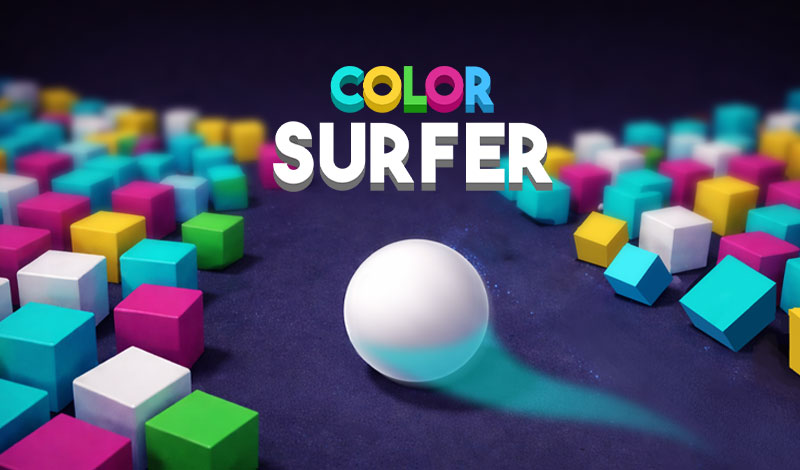
Color Surfer is one of those games that looks simple at first—but once you start playing, it pulls you in fast. It’s a high-speed 3D arcade runner where you guide a rolling ball down a narrow track packed with obstacles. The whole game comes down to one rule: match the color. As your ball races forward, you’ll run into gates, barriers, and objects in different colors—and you can only pass through the ones that match yours. Slip up just once, hit the wrong color, and it’s game over. I’ve lost count of how many times I’ve said “just one more run” after messing that up.
What really stands out to me is how much depth the game gets out of such a basic idea. The controls are super straightforward—you’ll pick them up in seconds—but actually surviving? That’s a different story. The speed ramps up, the patterns get trickier, and suddenly you’re making split-second decisions nonstop. It’s not just about reacting quickly; it’s about anticipating what’s coming next while your brain is scrambling to keep up with constant color changes.
One thing I genuinely appreciate is how the game never feels repetitive. With over 800 randomly generated levels, every run feels a bit different. Just when you think you’ve got the hang of it, the game throws in tighter spaces, faster sequences, or awkward patterns that force you to rethink everything. It keeps you on your toes in a good way—I rarely get bored because there’s always something slightly new to deal with.
Visually, the game is clean and vibrant without being overwhelming. The colors pop, the contrast is sharp, and everything moves smoothly, which actually helps a lot when you’re trying to react quickly. I like that I can instantly tell what’s going on without straining my eyes. Paired with the dynamic level design, it creates this satisfying loop where you fail, learn, improve, and jump right back in.
Arrow keys or A/D keys → move left/right
It’s easy to panic and just dodge whatever’s in front of you, but that usually gets you eliminated. I’ve learned to prioritize spotting the correct color first—movement comes after.
At first, I kept staring at the ball and reacting too late. Once I started looking slightly ahead on the track, everything got easier. You get that extra split second to prepare, which makes a huge difference.
Overcorrecting is a killer. I used to swing too far left or right and crash into something else. Small, steady adjustments are way safer, especially when things get tight.
Even though the levels are random, certain setups repeat. After playing for a while, you start recognizing them without even thinking. That muscle memory really helps.
I try to keep the ball near the middle unless I have a reason to move. It gives me more options if something unexpected pops up. Sticking to the edges usually just traps you.
This one took me a while to learn. When the colors start changing fast, it’s easy to freak out and make a bad move. Slowing down just enough to confirm the right color—even for a fraction of a second—has saved me more times than I can count.
Some versions give subtle audio cues for color changes or timing. These can help strengthen your reactions.
Since the game is reflex-heavy, your performance drops when you're tired. Short, focused sessions often lead to better improvement than long, unfocused play.
Each run ends quickly, but that’s part of the design. Pay attention to why you failed—wrong color choice, late reaction, or bad positioning—and adjust on the next run.